Watshoopedia / Shoes and fit
How running shoes should fit
Room at the front. A secure heel. Here is what to look for.
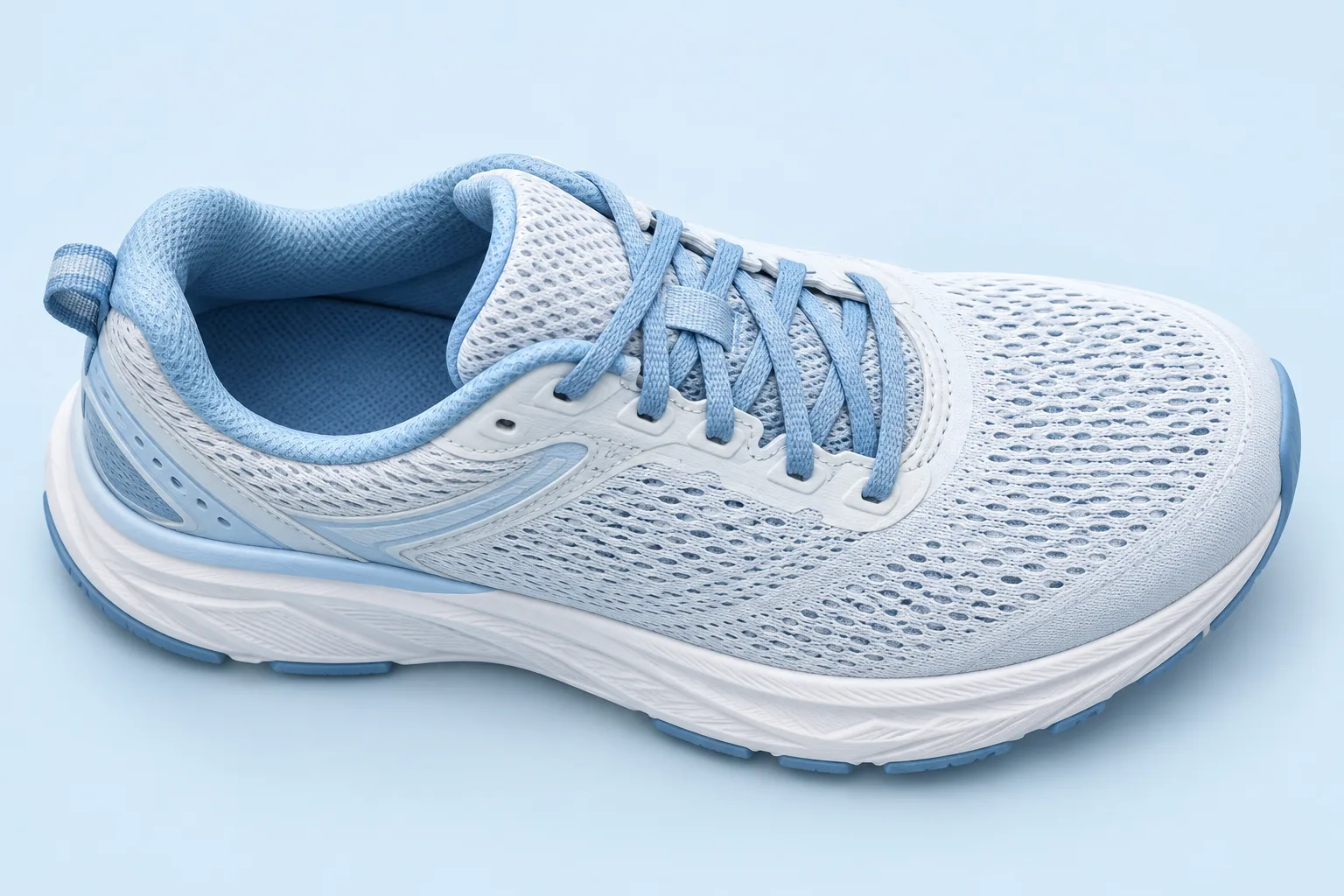
A little space beyond your longest toe
Around a thumb’s width is a starting point. Your toes should not hit the front.
AI-generated illustration, not a specific model. Tap the markers. Sources and further reading ↓
Feel the fit / three simple tests
Where do you need more room?
Put both shoes on. Stand up. Check one area at a time.
A little room up front.
Feel where your longest toe ends. Around a thumb’s width in front is a starting point.
Toes hitting the front?
Check the length and whether your foot slides forward. Try another size and make sure your heel still feels secure.
Open the size guide →Room for your toes.
Move your toes. Feel for squeezing around your big toe, little toe or forefoot.
Tight at the sides?
Compare a wider version or a different toe-box shape. A longer shoe will not necessarily solve the problem.
Brooks on width and volume →Hold without pressure.
Lace up comfortably. Walk a few steps and feel for pressure beneath the laces.
Pressure on top of your foot?
Try looser or different lacing. Still tight? Look for more space in the upper, also called volume.
See ASICS’ lacing techniques →The length is right, but the shoe still feels tight? Compare width, toe shape and space over the instep.
AI-generated shoe images show the areas to check.
Three steps to the right size
Measure both feet
Measure both. Allow for the larger foot.
Use the right chart
Check the model and women’s, men’s or unisex version.
Try them in motion
Use your running socks and any insoles you wear.
Nike explains CM and foot length → · ASICS on measuring and trying shoes →
Compare sizes. Then check the fit.
What do B, D, 2E and “wide” mean?
Width codes depend on the brand and version. This is Brooks’ chart, not a universal standard:
| Version | Narrow | Standard | Wide | Extra wide |
|---|---|---|---|---|
| Women | 2A | B | D | 2E |
| Men | B | D | 2E | 4E |
“Wide” may mean more room in the upper without a correspondingly wider sole platform. Check the manufacturer’s description of your exact model.
Does a brand always fit roomy or small?
Use the model and version as your reference. Altra, for example, offers several FootShape fits within the same brand. Try an updated version of your favourite shoe again too.
“True to size” usually describes a tester’s experience with their usual size. It does not promise the right width or the same fit for you.
When the fit is wrong
Choose the problem. Try one change at a time.
Toes hit the front or feel squeezed
Hitting the front: check length and whether your foot slides forward. Squeezed at the sides: compare width and toe shape. Pressure from above: look for a deeper toe box.
Do not automatically choose a much longer shoe to gain width. Check that your heel and midfoot still feel secure.
Wide forefoot and narrow heel
You need room in front and secure hold at the back. A roomier toe box may matter more than making the whole shoe larger. Compare different models of the same length.
For minor heel slipping, try heel-lock lacing. If you have to tighten the shoe uncomfortably to keep it secure, try another shape.
Pressure on the instep or too much room around the foot
Check lacing, sock thickness and insoles. All affect the room inside the shoe. A high instep may need more volume; a low-volume foot can move in a shoe with the right length.
Try more even or looser lacing if there is pressure. If that does not provide comfortable, secure hold, compare another model.
Heel slipping or rubbing
First check whether your whole foot moves inside the shoe. Try heel-lock lacing for minor slipping. Also feel for seams, sock edges and contact with the heel counter.
Rubbing at the back does not automatically mean the shoe is too large. A different heel shape or sock may matter more than sizing down.
The shoe fits at first but gets tight on longer runs
Feet can change size throughout the day. Try shoes later in the day with the same socks and insoles you run in.
Note where and when pressure starts. Try a short run before extending use. A comfortable shop fit does not guarantee comfort on a long run.
ASICS on timing and socks → · Watshoo’s long-run shoe guide →
Before you decide
Six things to check. Not a score or a guarantee of fit.
0 of 6 checks completed
A little more to know
Fit and pronation
Fit describes how a shoe surrounds your foot. Pronation describes movement. A low arch alone is not enough to conclude that you need a particular shoe category.
The 2022 Cochrane review found uncertain evidence for injury prevention when comparing several shoe types. Selecting shoes by static foot posture probably made little or no difference to injury rates; those particular studies involved military recruits. This does not prove that all shoes work equally for everyone.
Insoles and extra cushioning
An insole also changes the space inside the shoe. Bring it when trying shoes, and check toe height and heel hold again. Follow fitting advice if you have prescribed orthoses.
A snug racing fit versus a shoe that is too small
“Snug” means close hold, not pain or crushed toes. Assess racing shoes at the pace and for the use you intend. Fit, cushioning, drop and stiffness are different properties; good fit alone does not tell you how a shoe will feel when running.
Find a pair for your kind of run
Sources and further reading
Manufacturers inform practical fitting advice and their own sizing systems. Health sources and the research review inform symptoms and the limits of the evidence. Source links may use another language.
Brooks · How should running shoes fit?Toe room, heel hold, socks and trying shoes.ASICS · Ensuring your running shoes fitMeasuring, foot width and when to try shoes.Nike · Men’s footwear size chart (NO)CM on the label versus foot length. Select the appropriate version at Nike.Brooks · How do I know which width to choose?Width codes and the brand’s description of volume.Altra · FootShape fitsAn example of different fits within one brand.ASICS · Ways to tie your lacesIllustrated lacing techniques, including heel lock.ASICS · How to lace running shoesMore ways to adjust lacing.Guy’s and St Thomas’ NHS · Choosing shoes to reduce foot painToe shape, depth, length and room for insoles.NHS · Pain in the bottom of the footSymptoms and when to seek help.Cochrane · Running shoes for preventing lower-limb running injuries in adults2022 research review. The literature search ran to June 2021.