Watshoo · Running shoe finder
Running shoe finder for your pace, distance and terrain
Find running shoes across brands for your pace, distance and terrain. Try Finder free without an account. Recommendations are independent of prices and affiliate commission.
Find shoes for my run No account needed
Same runner. Different run. ↓Your first half marathon
Find shoes for your first half marathon
The course, your target pace and the time on your feet matter. Start with your actual race or describe the route yourself, then adjust the details before you ask Finder for shoes.
A fast racing shoe is not automatically the best choice. Compare the recommendations and check fit, size and available offers after you see the reasons.
Choose my half marathon shoesYour pace, course and runner details are yours to enter and edit. No example shoe is chosen for you.
How to choose running shoes with Finder
Describe your run
Choose the type of workout, distance, pace, elevation, surface and conditions. Add a current pace reference so effort can be interpreted relative to your level.
Compare the matches
Finder evaluates qualified shoes against that workout. Cushioning, response and stiffness interact with weight, grip, stability and the other properties; no single trait tells the whole story.
Understand the shortlist
Open “Why this shoe?” for the factors and effective shoe inputs. Compare alternatives, check the sources and use sizing information before choosing.
Finder
Same runner. Different run.
Switch the workout to explore recommendations from the current Finder engine.
12 km5:35/km60 m ↑RoadDry
Example runner: 75 kg · threshold pace 4:30/km. These are examples, not your personal results.
Explore the top three
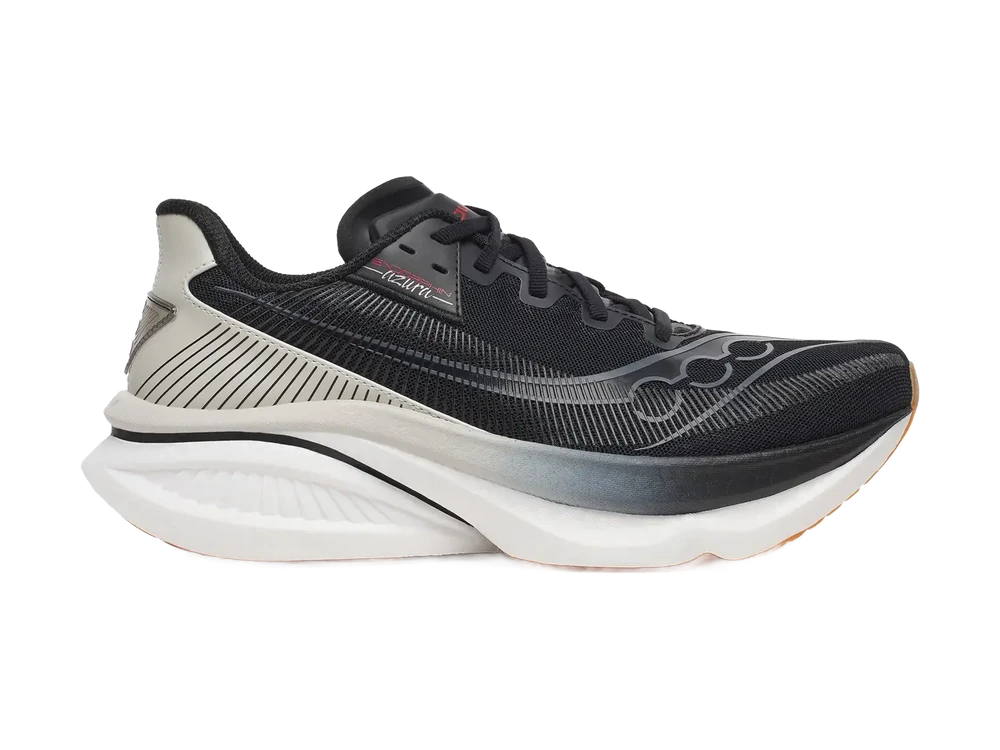
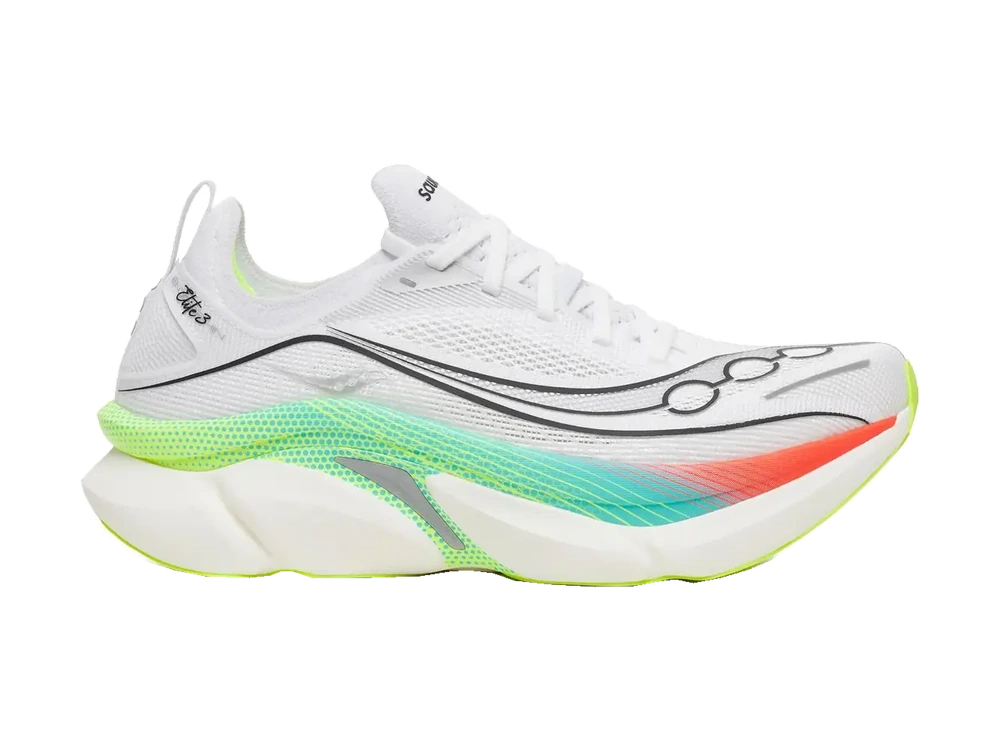
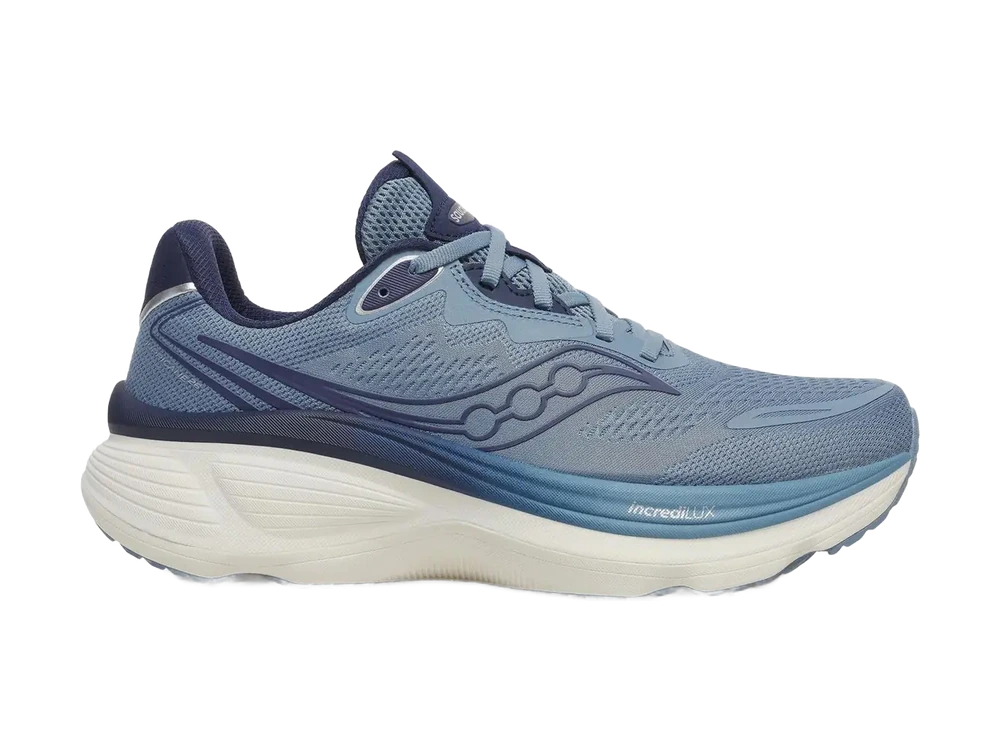
Saucony Hurricane 26
Why this shoe?
These are the values used for the selected shoe in this example. Change the workout or choose another shoe to see the difference.
- 11
- shoe inputs
- 7
- workout factors
- 3
- ranked examples
What matters for this run
Seven factors connect the shoe to the run. Their weights belong to this workout; they are not points you can add together.
Surface
Run type
Distance
Pace
Elevation
Runner
Conditions
Open the full calculation
The shoe values behind your match
These are the actual shoe inputs used for this result. Trait ratings use a 0–5 scale; they are not your match score.
Shoe weight262 gReviewed field group
Converted to lightness. It enters pace, distance, hills and runner fit, and faster run types.
Road suitability5/5Reviewed field group
Used in surface suitability and mixed-surface balance.
Trail suitability1.2/5Reviewed calibration
Used in surface suitability, estimated wet/snow grip and trail adjustments.
Cushioning4.8/5Reviewed calibration
Combined with comfort, protection and stability according to the task.
Responsiveness4.6/5Reviewed calibration
Used in faster run types, pace, distance and runner fit; also in fast-run and preference adjustments.
Comfort4.6/5Reviewed calibration
Foot-contact comfort contributes to run type, pace, distance and runner fit.
Stability4.5/5Reviewed calibration
Supports surface, distance, control, runner fit and condition assessments.
Grip4.4/5Reviewed calibration
Used where surface or weather adds grip demands, not for ordinary dry asphalt or elevation gain. Wet/snow grip may be estimated.
Agility4/5Reviewed calibration
Used in pace, distance and several run-type and surface combinations.
Bending stiffness3.3/5Reviewed calibration
Converted to task-specific suitability. Higher stiffness is not always a better fit.
Protection4.7/5Reviewed calibration
Used in run type, distance and runner fit, with extra long-run checks.
Ordinary ratings are multiplied by 20 for the calculations below. Weight becomes lightness; stiffness becomes suitability for each task. These are model values, not measured performance gains.
Lightness used: 70.84/100
How the shoe produces the run-type score
Fit × weight = contribution to this factor. These contributions are not points in the final match.
| Parameter | Factor calculation |
|---|---|
| Comfort | 92 × 32% = 29.44 |
| Cushioning | 96 × 27% = 25.92 |
| Stability | 90 × 20% = 18 |
| Protection | 94 × 16% = 15.04 |
| Stiffness suitability | 97 × 5% = 4.85 |
The shoe is assessed by its traits for this run type. Catalog categories add no score bonus or penalty.
Result after 0–100 bounds: 93.25/100
How the shoe produces the pace score
Your relative effort blends these two profiles. The weights below are within each profile.
Fit × weight = contribution to this factor. These contributions are not points in the final match.
Easy profile · 78.93%
| Parameter | Factor calculation |
|---|---|
| Comfort | 92 × 40% = 36.8 |
| Cushioning | 96 × 30% = 28.8 |
| Stiffness suitability | 97.94 × 14% = 13.71 |
| Stability | 90 × 16% = 14.4 |
Fast profile · 21.07%
| Parameter | Factor calculation |
|---|---|
| Responsiveness | 92 × 40% = 36.8 |
| Agility | 80 × 24% = 19.2 |
| Lightness used | 70.84 × 19% = 13.46 |
| Stiffness suitability | 99.64 × 12% = 11.96 |
| Stability | 90 × 5% = 4.5 |
93.71 × 78.93% + 85.92 × 21.07%
Result after 0–100 bounds: 92.07/100
From the factors to the final match
The engine uses a weighted geometric mean. A weak fit reduces the whole result; these rows are not points to add together.
Base score = 10 + 90 × (geometric mean / 100)². Factor inputs are bounded to 5–100. Adjustments follow, then the raw score is bounded to 1–99 and calibrated.
- Geometric mean
- 91.57
- Base score
- 85.46
- Run suitability adjustment
- -0.02
- Wear adjustment
- 0
- Runner preferences
- 0
- Mixed-surface adjustment
- 0
- Raw score
- 85.44
- Calibrated technical match
- 85.44
- Your shoe reviews
- 0
- Evidence uncertainty
- -0.2
- Final match
- 85.24
Figures are rounded for display. Ranking uses the continuous result. This is a suitability score, not a predicted time saving.
The same example runner is used for all three workouts. No personal shoe reviews, wear or preference settings are applied.
What does the match score mean?
A match score expresses the model’s assessment of suitability for a workout. It is not the probability that a shoe is right for you, a measured time saving or a guarantee of faster running. Small score gaps deserve a closer look at fit and evidence.
Measured facts, assessments and uncertainty
Weight is shown in grams; the ten trait ratings use a 0–5 scale. Ratings are Watshoo assessments, not raw laboratory measurements. Source-based calibration, provisional estimates and catalog-level information are labelled separately. Response, cushioning, stiffness, grip, terrain suitability, agility, stability, protection and comfort have been assessed under common norms, with provisional estimates where evidence is incomplete. Comfort means contact with the foot, such as rubbing and lacing pressure; protection means sustained shielding underfoot. Road suitability has not yet had the same review.
When the calibrated traits rely on provisional estimates, Finder applies one shared uncertainty deduction of up to 0.5 final points. Several uncertain traits do not each earn a separate deduction. Missing evidence for a trait does not establish that the shoe performs poorly.
Recommendations and prices stay separate
Retailer availability, prices and affiliate commission do not decide the shoe ranking. Purchase options come after the recommendation.
Questions before you choose
Do I need an account to use the running shoe finder?
No. You can enter a workout, see recommendations and compare shoes without an account. An account lets you save your runner profile, My shoes and shoe experiences.
Can I compare running shoes from different brands?
Yes. Finder assesses eligible models across brands using the same workout. If you already have two models in mind, open Compare to examine their characteristics and sources side by side.
Is the highest-rated shoe always the best choice?
It is the highest match for the entered workout under the current model. Your actual fit, comfort and experience still matter. A close second may be the more useful choice for you.
Does more cushioning, response or stiffness always help?
No. These properties describe different things, and their suitability depends on the task. A very stiff racing shoe and a cushioned easy-run shoe answer different needs.
Can I compare the running shoes I already own?
Finder can use your shoes, and saved shoe reviews can provide a bounded personal adjustment. These public examples do not use that personal information.
Does a high match score mean the shoe will fit my foot?
The score describes suitability for your run. Size, width and foot shape still need checking. Use the size guide as a starting estimate across the brands it covers, then check the exact model’s fit notes and the retailer’s return policy.
Your next run sets the question
Give Finder your own workout and see which shoes make your shortlist.
Find shoes for my run →Explore the running shoe guides