Watshoo Tested · Wear test · approx. 170 km
ASICS Sonicblast – review and running experience
Light on foot, with a lively response as the pace rises
Published
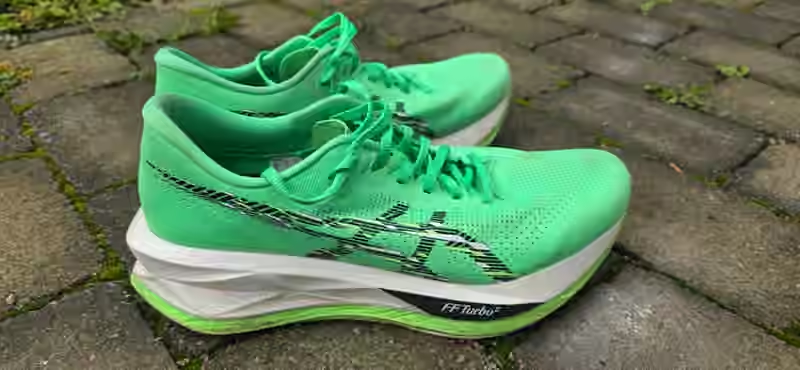
Watshoo verdict
For Magnus, Sonicblast is a very strong all-round option for road and gravel, especially when easy running turns into a quicker effort. Responsiveness, versatility and perceived value make it a favourite. He would buy it again at full price. The tongue, heel seam and limitations on technical terrain are the caveats to know about.
- Tester
- Magnus · 185 cm
- Weight during testing
- Approx. 85 kg
- Distance used
- Approx. 170 km
- Longest run
- Approx. 15 km
- Size
- EU 44
- Typical easy pace
- 5:20 min/km
- Preferred pace range
- 4:30–5:30 min/km
Test conditions
Sonicblast was used mainly on road and gravel: easy runs up to about 15 km, steady Z2 runs of 8–10 km at around 4:40/km, and faster work in low-to-mid Z3. Technical woodland trails were also tried. These are observations from everyday training, not a laboratory test.
Strengths
- Light and responsive ride
- Versatile from easy runs to tempo
- Secure fit once the lacing is right
- Little wear and intact heel lining after approx. 170 km
Caveats
- The tongue can slide to one side
- The heel seam is noticeable on some runs
- Less convincing after approx. 12–14 km
- Poor on technical trails; not tested beyond 15 km
Ride and responsiveness
Magnus first noticed how light Sonicblast felt on foot and how well it responded when he increased the pace. The cushioning sits between soft and firm. The stride feels natural, without an aggressive rocker directing the movement.
It has become a preferred choice for slightly faster runs of 8–15 km. At around 4:40–5:10/km, a cadence of roughly 160–165 feels natural to this tester. This describes his experience, not a recommended stride or a demonstrated efficiency gain.
Fit, tongue and lacing
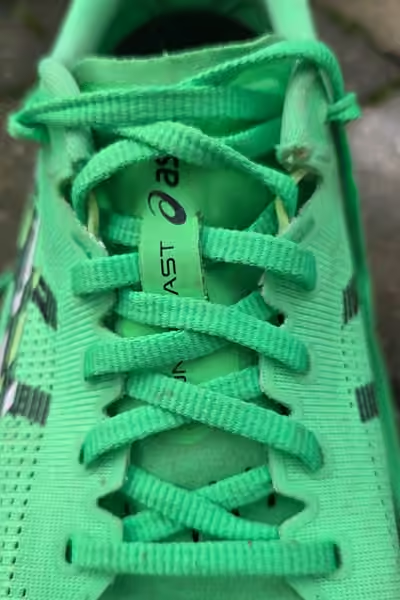
EU 44 fits well, with good room at the toes and heel. The instep and midfoot are more snug, but not uncomfortably so. Magnus uses heel-lock lacing; without it, his heel can slip a little.
The tongue is the main irritation. It can slide sideways beneath the laces and sometimes needs adjusting. A seam at the heel is noticeable on some runs but unproblematic on others. The underlying fit is good, but getting it right is not always completely straightforward.
Cushioning and comfort over distance
Protection feels good up to about 12–14 km. Beyond that, the shoe can feel a little less lively. Magnus stresses that his own muscular endurance may contribute; this test does not establish that the midsole bottoms out or loses its properties. After runs up to about 15 km, his legs still feel fresh the following day.
The tester thinks the cushioning could suit runners up to roughly 90 kg, while heavier runners may prefer more cushioning. This is his rough assessment, not a tested weight limit. Runs beyond 15 km and marathon use are not documented in this test.
Grip and stability: stick to even ground
On road and gravel, Sonicblast feels secure and stable, even when his legs tire. Grip is described as very good on dry asphalt and acceptable in the wet.
On woodland trails with roots and stones, Magnus rolled his ankle twice and had several near misses. Technical ground was a poor match, particularly when slightly wet. His experience narrows the use case to road, gravel and possibly smooth, easy trails, rather than technical terrain.
Durability: a particular plus at the heel
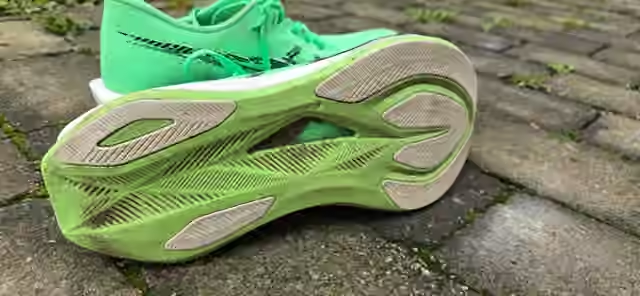
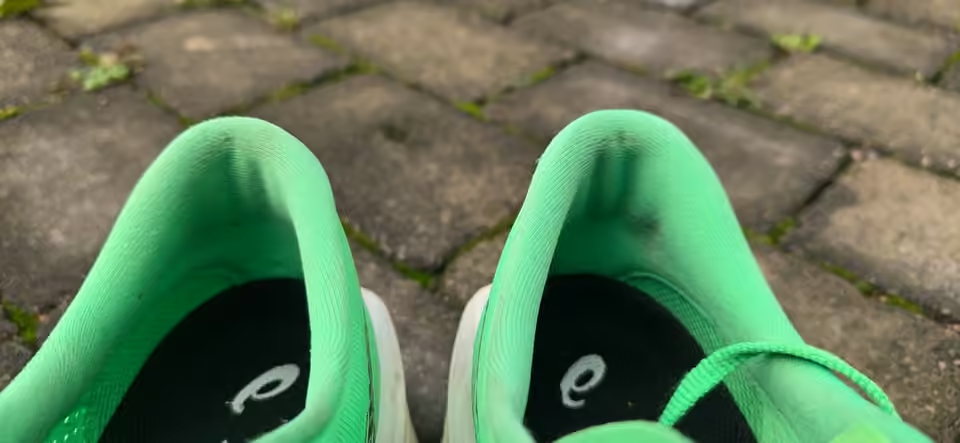
After about 170 km, Magnus reports very little wear and no noticeable lasting change in the midsole, outsole, grip or upper. The photos show signs of use, but the heel lining remains intact.
Magnus has a bump at the back of his heel and usually wears holes through the heel lining of almost every running shoe. That has not happened with Sonicblast. This is a tangible positive for this particular tester, even though he sometimes feels the heel seam while running.
His rough lifespan estimate is 500–600 km. That is an estimate, not an observed lifespan or a guarantee.
Compared with Puma Deviate Nitro 4
The closest reference is Puma Deviate Nitro 4. Magnus prefers Sonicblast because it feels lighter on his feet, not on the basis of his own weight measurement. He feels its versatility makes it particularly useful in a small rotation of two or three pairs.
The tester’s use-case ratings
Scale: 1 = very poor, 2 = poor, 3 = OK, 4 = good, 5 = very good for that use. A 5 does not mean flawless. Numbers map directly to the tester’s descriptions. There is no overall score, and these ratings do not change Finder scores. Specific race use is not documented.